Activities of
Daily Living.
The foundational self-care skills every person needs — bathing, dressing, eating, toileting, and more. Taught with patience, structure, and joy.
What are ADLs?
Activities of Daily Living — or ADLs — are the basic, personal self-care tasks that a person performs every single day to maintain their body and health. They are the bedrock of human independence, so familiar to most people that they are entirely automatic.
For children with autism, these tasks are often far from automatic. Sensory sensitivities, motor differences, communication challenges, and anxiety can make what seems “simple” feel genuinely overwhelming — for the child and the family.
ADL instruction is the structured, compassionate teaching of these skills — broken into small steps, embedded in consistent routines, and celebrated at every milestone.
“Independence in daily living is not a small thing. It is freedom.”
At Petals, ADL skills are woven into every product category. Because the goal is not just a child who can perform in a therapy room — it is a child who can navigate their morning, their home, and their world.
Seven areas of daily living.
Click any skill area to see what it involves and how to teach it.
Three principles that change everything.
Task Analysis
Break every ADL into the smallest possible steps. 'Get dressed' is not one task — it is twenty. Teach each step before chaining them together.
Consistent Routine
Same time, same order, same cues, every day. Predictability reduces anxiety and frees cognitive resources for the task itself.
The Right Prompting Hierarchy
Start with the least intrusive prompt — a visual cue, a gesture, a verbal reminder. Fade prompts as quickly as the child allows to build genuine independence.
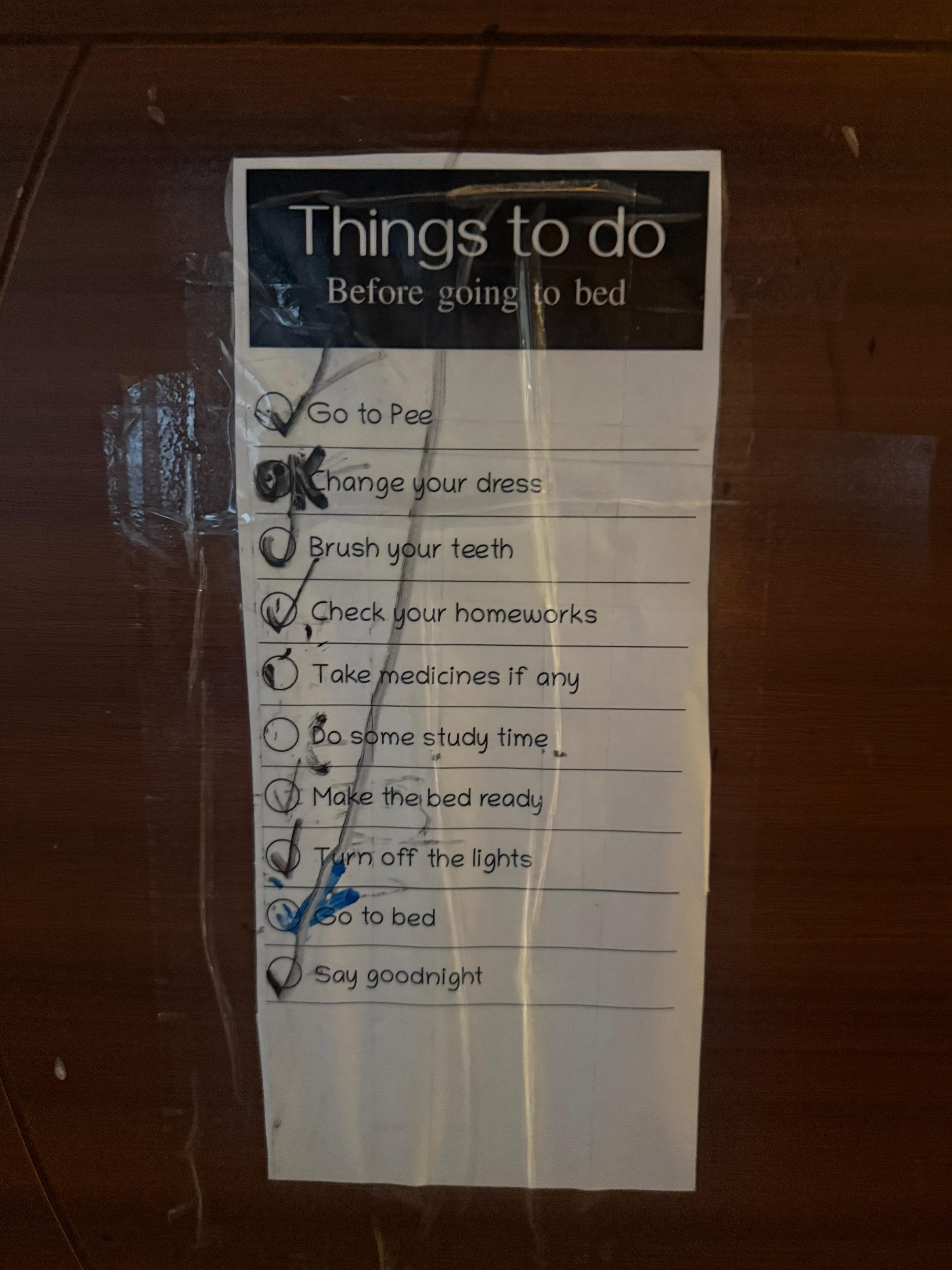
Visual Routine
A checklist makes the invisible, visible.
ADLs are not a goal. They are the foundation.
Start with the basics.
Every Petals product is a tool for real life. Browse our collection of ADL-informed learning materials designed for the home.