Early Foundational
Learning
The principles, pillars, and practices behind meaningful development for children with autism — explained simply, for the families who need it most.
What exactly is EFL?
Early Foundational Learning is not a single therapy or curriculum. It is a philosophy — a way of thinking about how young children with developmental differences (including autism) build the core capacities they need to engage with the world.
The word "foundational"is key. Before a child can read, socialise, or manage a classroom, there are invisible layers of development that must be laid: the ability to regulate one's sensory experience, to understand that actions produce reactions, to feel safe enough to explore, to communicate even one desire.
EFL is the intentional, joyful, and highly individualised work of building those layers — one small, celebrated moment at a time.
“If you know one person with autism, you know one person with autism.”
That is why EFL refuses a one-size approach. It begins with the child — their strengths, their interests, their nervous system — and works outward from there.
Why does “early” matter so much?
The first eight years of a child's life are a period of extraordinary neuroplasticity — the brain's ability to form new connections at a remarkable rate. Research consistently shows that structured, responsive, and play-based learning during this window produces lasting developmental gains.
This does not mean intervention after eight years old is helpless — far from it. But it does mean that the years before formal schooling begins carry disproportionate developmental weight.
For children with autism, early identification and EFL-informed support can significantly improve outcomes in communication, adaptive behaviour, and quality of life — for the child and for the whole family.
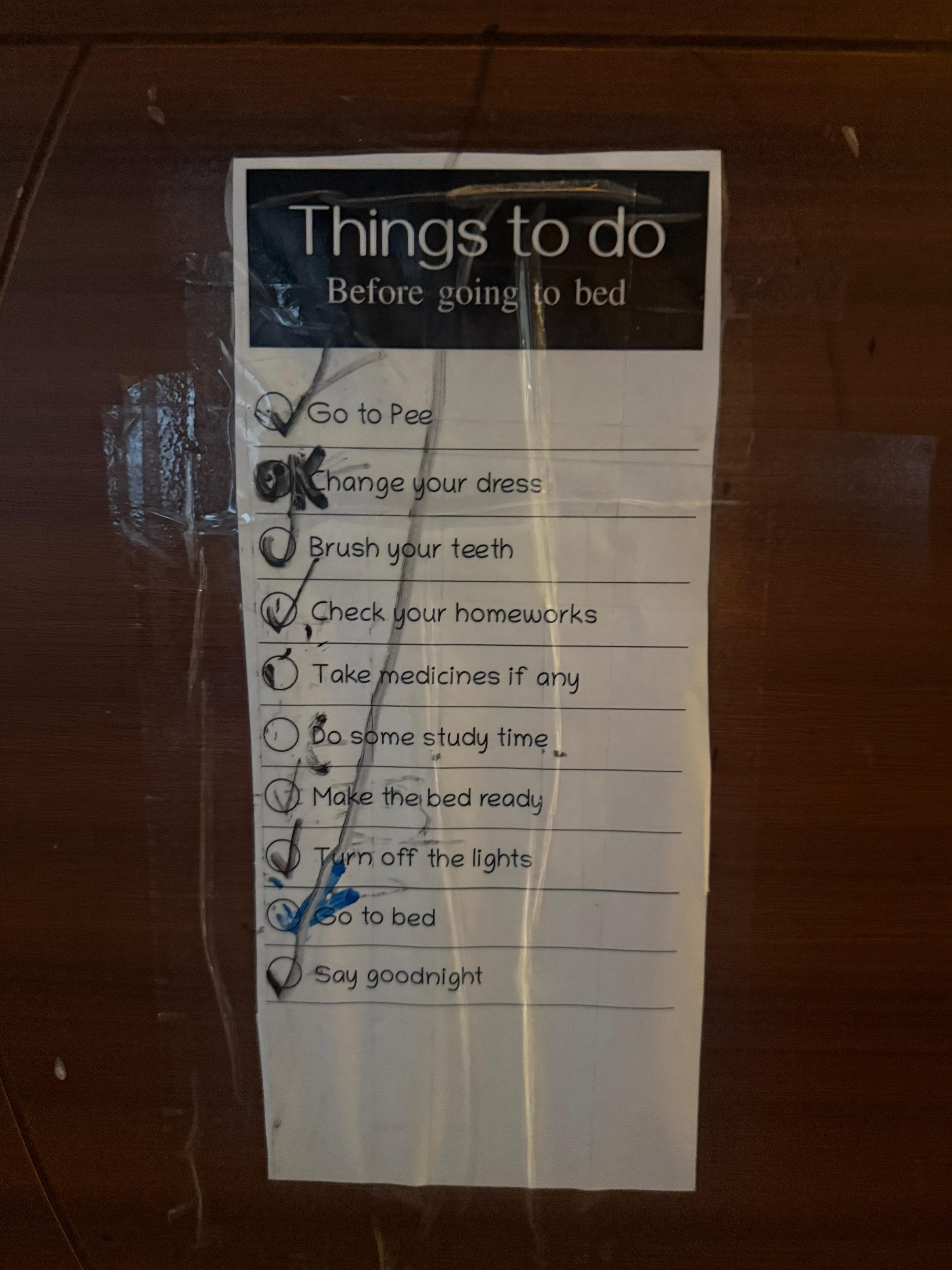
Real EFL in action
Structured, joyful routines at home
Six pillars of growth.
EFL is not a checklist. These six domains are deeply intertwined — progress in one often unlocks growth in all others.
Cognitive Development
EFL builds the mental scaffolding a child needs — sorting, sequencing, cause and effect, problem-solving. Every activity is a tiny step toward independent thought.
Emotional Regulation
Feelings come before words. EFL prioritises helping children name, understand, and manage their emotional states through predictable, gentle, joyful routines.
Communication & Language
From a pointing gesture to a first word — EFL nurtures every form of communication. AAC, PECS, sign, verbal — all are celebrated equally.
Sensory Integration
Children learn best when their sensory system feels regulated. EFL embeds sensory consideration into every learning experience, not as a separate step.
Adaptive Behaviour
Dressing, eating, transitions, toileting — daily living skills are the quiet heroes of EFL. Mastering these builds true independence and dignity.
Social Connection
Joint attention, turn-taking, imitation — EFL grows the social skills that connect your child to the world, at their own pace and in their own way.
You don't need a clinic. You need a routine.
The most powerful EFL happens not in a therapy room but at the kitchen table, during bath time, on the walk to school. Consistent, loving, structured moments are the medium of early learning.
Follow Their Lead
Start where your child is — their interests, their pace. Motivation is the fuel of all learning.
Make It Predictable
Children with autism often thrive with clear beginnings and endings. Visual cues, consistent routines, and advance notice of transitions reduce anxiety dramatically.
Celebrate Everything
A look, a reach, an approximation of a sound — these are milestones. Joy is reinforcement. Celebrate loudly and often.
See how Petals products bring these principles to life
Explore All ProductsCommon questions.
Ready to start the journey?
Every Petals product is designed with EFL principles at its core — created by parents who lived this path, for families beginning theirs.